Folk Horror Werewolf Forest Tapestry Throw Blanket
$13.50
- Free shipping $100+ · Printed & shipped from the USA
- Secure checkout · SSL encrypted payments
- Easy returns · 30-day hassle-free policy
Description
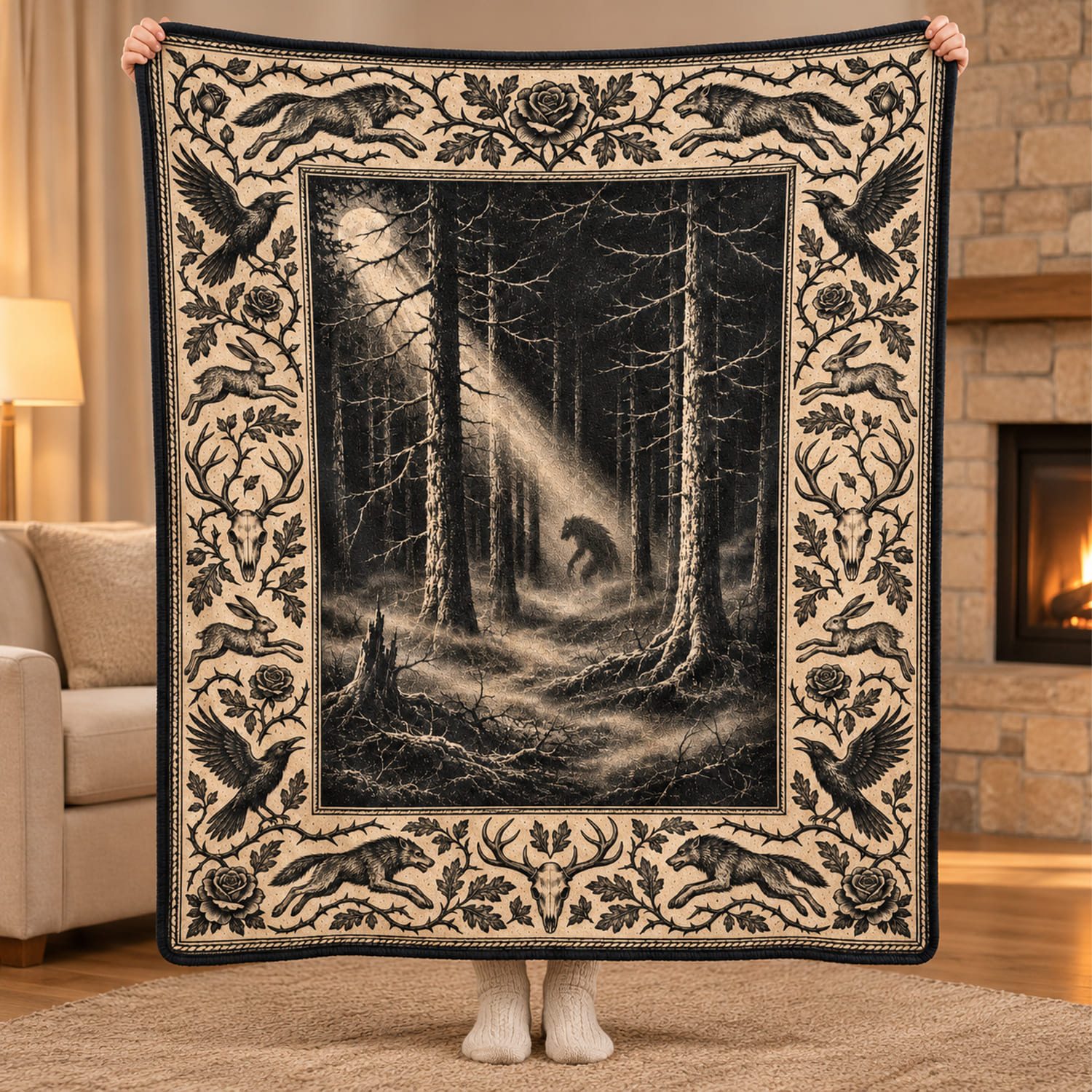
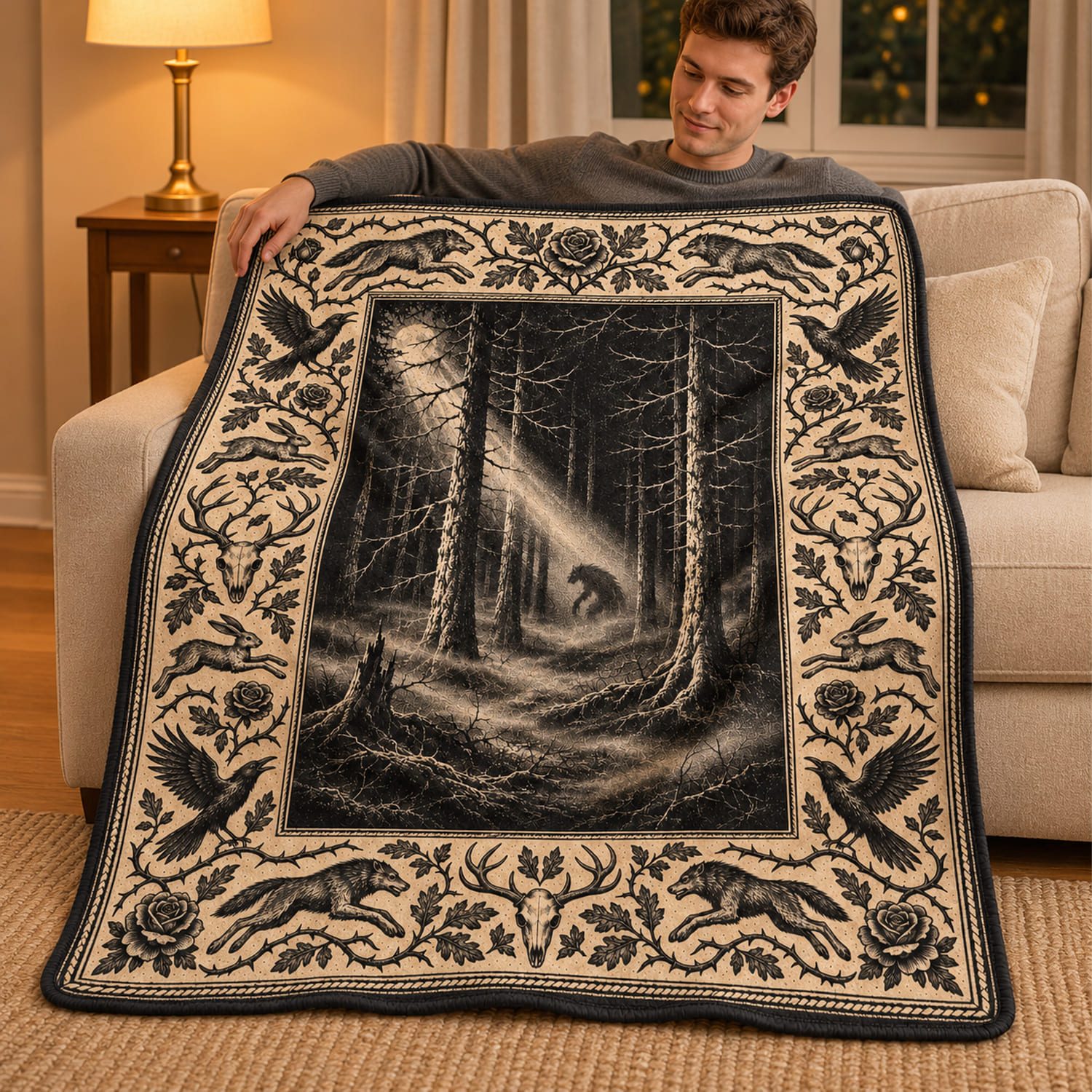
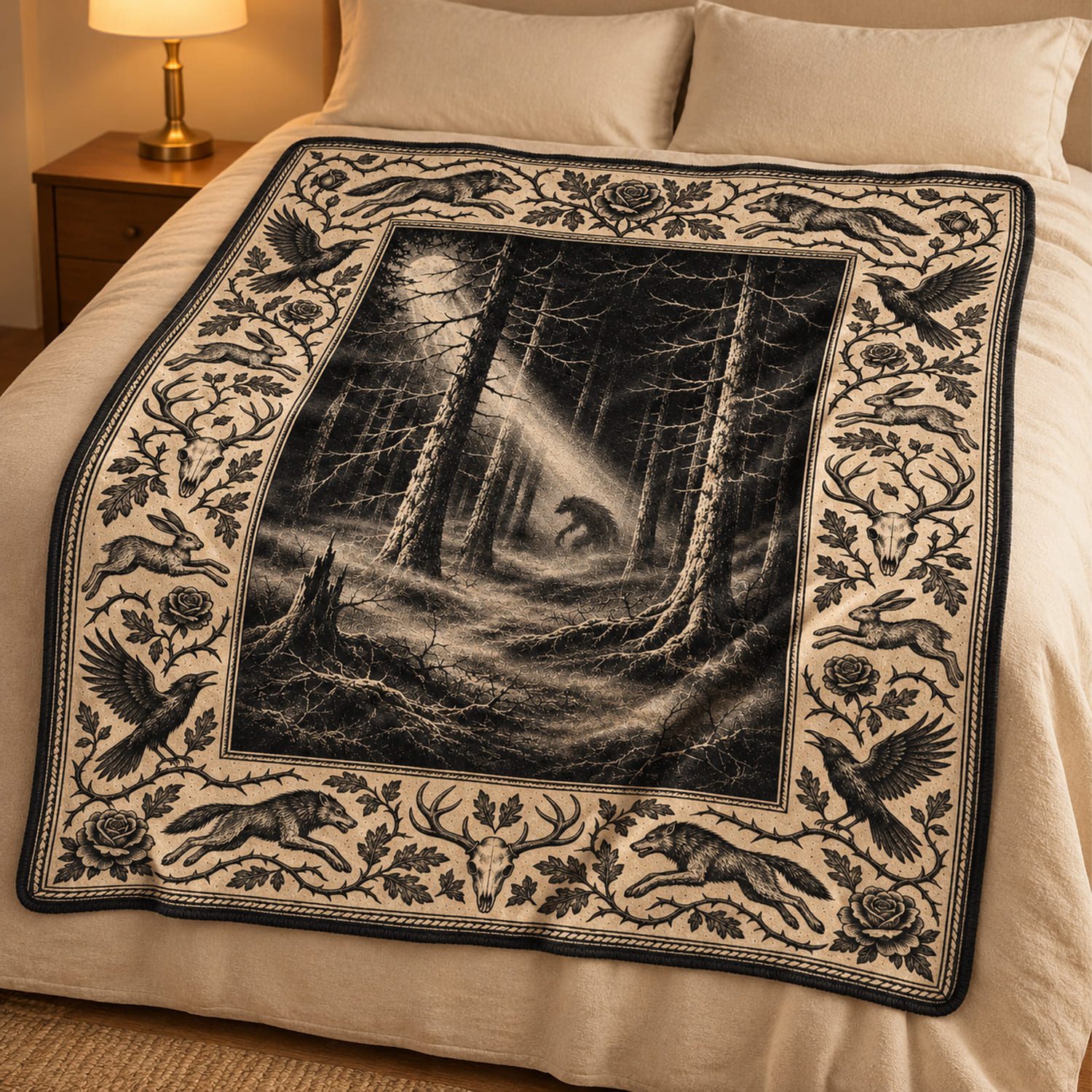
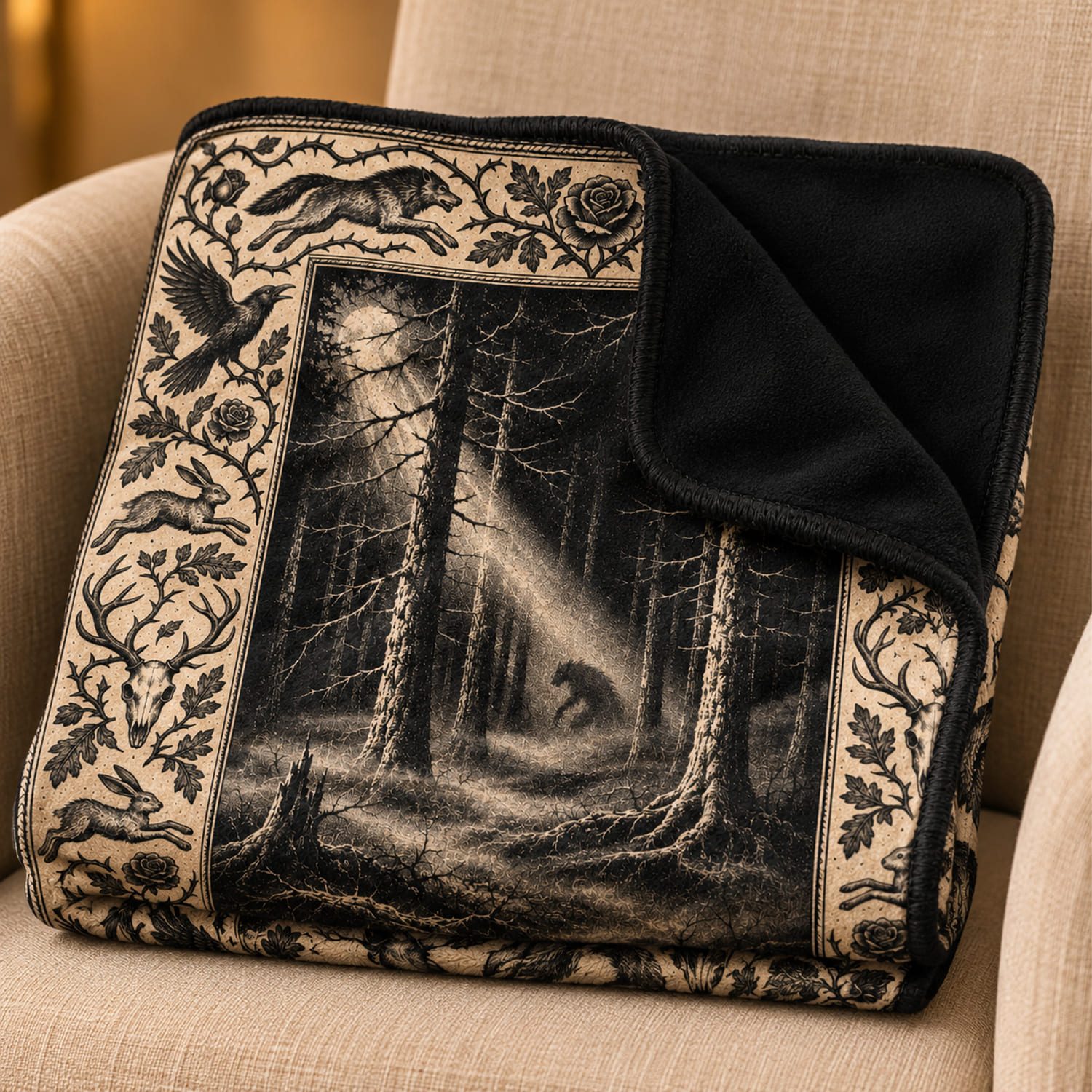
Folk Horror Werewolf Forest Tapestry Throw Blanket is a printed fleece throw that carries a two-tone antique engraving design of a moonlit pine forest where a shadowy werewolf stands half-hidden among the trunks. A cream border frames the…
Shipping & delivery
Every order is printed on demand just for you. Production takes 2–4 business days, then US delivery takes 3–7 business days with tracking.
Free standard shipping on US orders over $100.
Returns & exchanges
Wrong size or damaged item? Contact us within 30 days of delivery and we will make it right with a replacement or refund. Read the full policy
Product details
Folk Horror Werewolf Forest Tapestry Throw Blanket is a printed fleece throw that carries a two-tone antique engraving design of a moonlit pine forest where a shadowy werewolf stands half-hidden among the trunks. A cream border frames the scene with a medieval bestiary of running wolves, ravens, hares, antlered deer skulls, thorny branches, oak leaves and roses, evoking the quiet dread of old European woodland legends.
Moonlight through the pines, the forest watches.
Product Details
- Choose polar fleece, soft minky, or plush sherpa fleece.
- Available in sizes from 30×40 to 60×80 inches.
- Artwork applied by durable sublimation print.
- Clean finished edges for everyday use.
Where Did the Werewolf Legend Come From?
The English word “werewolf” comes from late Old English werewulf, combining wer (man) and wulf (wolf). In Ovid’s Metamorphoses, written in the first century, Zeus transforms King Lycaon of Arcadia into a wolf after the king serves him human flesh. Centuries later, in 1589, the trial of Peter Stumpp in Bedburg, Germany, became one of the most documented European cases of alleged lycanthropy.
What Does the Border Pattern Recall?
The wide cream frame draws on the visual language of early European woodcuts, a print medium that spread across the continent in the early fifteenth century and was widely used for book illustration and popular imagery. Wolves, ravens, hares and antlered skulls appear as classic bestiary motifs that once filled the margins of medieval manuscripts and printed sheets.